söndag 26 juni 2016

Savage Stone Age


Even if it cannot be seen on this blog (yet), I do have more nerdy favourites than Miss Fisher's Murder Mysteries. My second largest is the British sketch show Horrible Histories. It is mainly aimed towards children, but it has a huge adult fan base as well, which is not really surprising. It is based on books by Terry Deary and to a Swedish audience it is probably best described as similar in its setup to the Swedish children's show Fem myror är fler än fyra elefanter. Both consist of educational sketches and songs and both also use humour to teach children about certain themes. Fem myror är fler än fyra elefanter teaches them to read and count and therefore has a somewhat younger audience than Horrible Histories, whichs main theme is history. And not just history taught in school which mainly involves years, wars and rulers. The show uses fun, weird and sometimes quite gruesome facts about time period, people or weird thing that happened.

The humour of the show is what I like the most. It is not like in so many other shows aimed both towards children and adults today, it usually trusts its audience to be smart enough to get the jokes and messages that it want to get across. For short: it treats even children like they have a brain and they can think for themselves. The jokes are seldom straight forward and often want to evoke a reflection process in the audience, which it also seem to manage. It encourages children to do their own research and also be quite source critical. I can go on and on in my praises of the show, but I also have some minor criticism about it. Mainly when it comes to how the Stone Age and the Neanderthals are portrayed. These themes are often quite stereotypically depicted and the extremely problematic term "cavemen" is used often during the shows Stone Age sketches. It also portrays people who barely can speak, especially when it comes to Neanderthals. The subject of Neanderthals speech abilities has been discussed among scholars a lot in recent years and we have not heard the last about it. However, there are great sketches about the Stone Age as well in the show. Sketches that really problematize the concept and the general picture of the Stone Age human. The best I think is the one illustrated by the pictures below.


Normally I prefer later time periods like the Iron Age and Middle Ages, but after participating in a huge archaeological excavation in Motala in Sweden a couple of years ago, I see myself as tiptoeing around in the Stone Age as well.
First of all, the Stone Age is, like every other historical time period, is a construction of later times mainly made by academics to sort through the mess that historical facts can be. Just the Stone Age is part of the so called Three-age System that the Danish antiquarian  Christian Jürgensen Thomsen put together for the archaeological collection at the National Museum of Copenhagen in the 1820's. Therefore it fits best for the Scandinavian prehistory and might be less convenient for other geographical areas. It is not all the time good and handy and can be very unwieldy. However, I still is the most practical way to handle it.

The Stone Age can be divided into three smaller chunks: The Paleolithic, (the older Stone Age), The Mesolithic, (the Middle Stone Age) and the Neolithic (the New Stone Age). These divisions is based mainly on livelihood, but also somewhat on climate changes. I think the Paleolithic in some cases can be stretched as far back as we can get, even long before our own speices, Homo Sapiens, did evolve. The Mesolithic is mainly used for Northern Europe which was covered by the ice during the Ice Age. During both of these periodes, humans were nomadic hunter gatherers. During the Neolithic on the other hand, people started settling down with agriculture and pets. Even though, dogs seems to have been domesticated already during the Mesolithic.

But enough about the period itself! What I want to talk about in this entry is the depiction of the time period in popular culture. What does the Stone Age generally mean to someone who is not an archaeologist and why is it depicted as it is?

Stone Age is probably the one period that brings out the contemporary evolutionistic biases of the Western world the most. The period was mainly created through Western colonial contact with other types of societies and analogies were used to make parallels between the distant past and the distant present.

Archaeology as a science has its roots in the antiquarian tradition of the 17th and 18th century, but was not really founded as a dicipline until the second half of the 19th century. Charles Darwin's theories of (biological) evolution played a huge part in the development of the dicipline and cultural evolution was seen as an extention of it. The process was unilinear and everything was seen as striving to evolve. This lead (Western) scholars to place different cultures into hiearchies based on the level of evolution. Of course the Western one was the ultimate goal as to which every other society would become. Hunter-gatherer groups of (especially America, and Australia) were placed at the bottom of the hiearchies. They were seen as the last remains of Paleolthic hunter gatherer groups and had not the means to evolve by themselves. Neither the Stone Age nor the contemporary hunter-gatherer groups were viewed as societies and cultures that were supposed to be studied in their own rights and contexts, but as a mean to exaggerate how evolved the Western world had become and also to legitimize Western imperialism since contemporary hunter-gatherer groups were not able to evolve without the influence of the Western society.

Unfortunately this colonially biased view of the Stone Age has remained in Western popular culture and can be seen in many of the Savage Stone Age sketches of Horrible Histories, but I really enjoyed the one shown by the pictures above. This because it problematized our view of the Stone Age and also showed that white men still carry prejudice towards other culture. The joke works because, on the contrary to much humour of today, it is not bullying on the people already lying on the ground. It is the white man, considering higher up in the hiearchy that is suffering for his prejudices instead. That is humour at its best!

lördag 18 juni 2016

Phryne and the Astrid girls

First of all I want to apologise becauce this entry will be really long, but I have had lots of thoughts about this, so I hope you will stick with me until the end.

The Honorable Phryne Fisher was first of the entries in my My Heroines series. She is the latest in a long line of female fictional character that I have looked up to for inspiration, strength or just comfort.
As a Swede watching Miss Fisher's Murder Mysteries, I have found myself thinking back to some of my other heroines from the past. Mainly the girls that Astrid Lindgren has written about. For example Madicken, Ronja rövardotter (Ronja, the robber's daughter), Pippi Långstrump (Pippi Longstocking) and, maybe the most obvious in relation to Phryne's profession: Eva-Lotta Lisander from the books about Mästerdetektiven Kalle Blomkvist (Kalle Blomkvist, the master detective).
 
Pippi Långstrump
If you have never encountered "the Astrid girls" before I can strongly recommend you to read the books and/or see the Swedish films about them. (I do not give much about the other adaptations of them besides the anime version of Ronja.) The best part is that they are all just as enjoyable for adults as they are for children.

My nerdiness for Phryne got me to reread both of the Madicken books and Ronja rövardotter. It also got me thinking about an article by Swedish writer and journalist Margareta Strömstedt in which she analyses the gender roles in Astrid Lindgren's authorship that I read awhile ago: "Du och ja, Alfred" - Om kärlekens kärna och om manligt och kvinnligt hos Astrid Lindgren (1996). She states that: "Det är svårt att få någon riktig ordning på könsrollerna i Astrid Lindgrens böcker." ("There is no real order to the gender roles in books by Astrid Lindgren"). A conclusion, I find to be true based on both Strömstedt's argumentations in the article mentioned above and on my own memories of both the female and male characters in Astrid Lindgren's "universe".
 
Ronja rövardotter
Madicken is often described as a boy and compared to her father on several occasions throughout both books (Her little sister Lisabet is compared to their mother.). She still however plays with dolls and loves to dress up from time to time.

Pippi has been discussed as a boy disguised as a girl by commentators, but they kind of miss the point. Even though she is outspoken, physically strong and care-free, she still harbour traditionally "female" characteristics. She is caring and motherly towards others and becomes like an extra mother to Tommy and Annika who's parents willingly leave their children in her care.

Eva-Lotta and Rasmus
Eva-Lotta is only a girl on Mondays. The rest of the week, she calls herself a boy being a knight of the White Roses together with Kalle and Anders. They play "war" (The war of the Roses) with the Red Roses Sixten, Benke and Jonte trying to get hold of the stone they call Stormumriken. Despite acting like a boy most of the time, she still loves puppies and babies and she is very brave revealing murderers and letting herself get kidnapped just so the little boy Rasmus will not be so scared.

Ronja lives her life in a robber's castle and spends all day out in the forest far away from any gender norms. She grows up with her parents Mattis and Lovis and the father's gang of robbers. The male robbers are the breadwinners and her mother is a housewife, but that still does not mean that Lovis is weak. Quite the contrary! Lovis might spend her days cooking and cleaning, but she does never take any of the robbers's shit. Both she and Ronja stands up for themselves and what they believe in when Mattis behaves like a pig and, for example kidnaps the enemy robber chief Borka's son Birk whom Ronja has befriended in secret.
 "Röva kan du göra, pengar och saker och vad skräp du vill, men människor, kan du inte röva, för då vill jag inte vara din dotter mer" ("You can steal. Money and things and whatever trash you want. But you cannot steal humans because then I do not want to be your daughter anymore")
~ Ronja rövardotter
There is a great deal of humanism in both the Astrid girls and Phryne. A willingness to put their own need aside for someone who is wunerable is often present in all of them for example. It is clear in Ronja's reaction to Mattis kidnapping Birk. Astrid gives us an important message in the quote above. Humans are something totally different than money and things. There is no defense for robbing anyone of their freedom.

In Madicken the humanistic approach is strong in Madicken's sense of justice and empathy for everyone. She does have prejudices towards her much poorer classmate Mia and Mia at the same time also has prejudices towards Madicken because Madicken comes from a wealthy family. This makes Mia acting as sort of an antagonist towards Madicken. They even get into a physical fight ending with Madicken getting a bloody nose. Both girls have to deal with their prejudice before they can become friends. I think this is a really great message and one that we need to address more than we do today. You cannot really blame people for being prejudiced. Everyone will always have some prejudice against others. I would even say it is perfectly normal to have them. It is how we deal with our prejudices when we face something that contradicts them that is most important. Are we letting them blind us or do we let the new facts challenge our view of the world and other people?

Madicken and Lisabet

Pippi already from the beginning stands up for the weaker, using her physical strength to throw up bullies in trees because, as she says herself: "Den som är väldigt stark måste också vara väldigt snäll. ("One who is very strong, also needs to be very kind."). She could easily use her strength to gain power, but instead she is very restricted in when or how she uses it. She is first and foremost loving, caring and kind. (Like with so many of the Astrid Lindgren characters, things just happen around her!)
 "I can't help you if you won't tell me the truth."
~ Phryne Fisher
Like the Astrid girls, Phryne's sense of humanity is shown in her compassionate nature. Not least for women exposed to different kinds of hardship. When Dot gets fired and questioned by the police, Phryne provides her with a home and a new job. She also takes the teenage girl Jane in under her wings and becomes a "guardian angel" for her. When a teenage girl is found murdered, she teaches Jane and her friends self-defense. (I love Phryne's facial expression in the picture bellow from when an old lady shows up at Wardlow claiming to be Jane's aunt. She clearly senses Jane's fear of the woman and her vulnerability is mirrored in Phryne's facial expression.) 
 
Phryne with Jane

One other aspect of Margareta Strömstedt's article described above that I find especially intriguing is that Strömstedt thinks Astrid Lindgren sort of "plays around" with the ideal woman that originated among the bourgeoisies in late 18th century Europe. The gender roles were, among the bourgeois, considered static traits. The woman was expected to fit into a family constellation in which the man was the sole breadwinner. The man was the one seen in society outside of the house. He was the one who built society, and he built it around himself. The female sphere was much more intimate; at home where the man could relax. The traits a good woman was supposed to have, were the ones that fittet the bourgeois male the most. She was supposed to be physically attractive, timid and fragile, wherefore she was in desperate need of male guidance. She was the man's subordinate in just about every aspect of life and was supposed to love him submissively. This is the type of woman Lindgren portrays (rather ironically) in Madicken's mother.

When you think about it, it is quite strange that these ideals spread so widely in society when experience from other social classes contradict the notion of women being weaker and less valuable to society than the men. A farmer's wife would never survive with the traits of the burgeois woman. In fact, the whole farm would probably collapse if she would just sit around playing piano and/or being bedridden because of a headache all day. In the farmers's world, in which Astrid grew up and in which she found her main inspiration, the woman was theoretically subordinated to the man, but practically his equal. She needed the same trait as the man. She needed to be practial, have strength and endurance. Lindgren herself was never an outspoken feminist, but she knew about the strength of women and was never late to tell people off for having prejudices against them. (For one thing, she became rather upset and declined contributing to an anthology of the diocese in Linköping during the 1960's because they were openly against female priests.)

Phryne Fisher
I find these ideals interesting also when it comes to Phryne. She is often considered to behave in an "un-womanly" fashion (Just ask her aunt Prudence!). She drives fast cars, climbs buildings, knows about sports like football, tennis and boxing and she handles a gun just like a man. Besides that, she is also sexually liberated, having sex just because she likes it with whomever she is attracted to at the moment. Phryne is a rather wealthy woman and belongs to the upper classes of society. However, this has not always been the case and she grew up in poverty with an alcoholic father (Much like Madicken's neighbour, the 15-year-old boy Abbe.). The differences in the expectations of woman in the different social classes in which she has found herself might actually be a clue to her personality. Not that I know much (or really anything) about the ideal of women in lower social classes in early 20th century Australia, but I can imagine it being similar to the Swedish famer's women and not so much to the ideal bourgeois woman.

Phryne's character is more similar to the Swedish farmer's women than the bourgeois's as described by Margareta Strömstedt. The money and title she has inheritade do not limit her freedom. Instead, the seem to provide her with the opportunity to pursue all her dreams. She certainly has the spirit of an Astrid girl: witty, adventurous, headstrong, kind, empathetic, somewhat quirky and totally loveable. I can definitely see her dreaming of becoming a pirate like Pippi or watch out to not fall into the river by the river (Because where else can you do that?!) like Ronja. Jumping across Helvetesgapet (The gap of hell) together with Jack Robinson, like Ronja does with Birk is probably also something she would love to try. (Even though I am not so sure Jack would be as willing to accompany her as Birk is...)


There is however one Astrid girl that I think she is a little more similar to than the others. The collage at the begining of this entry might give you an indication... Of course I am thinking about Madicken! (I have already written an entire post about her. If you want to know more, you can find the link above or here). They are almost contemporary (The Madicken books are set during the First World War and Miss Fisher in 1928-29) and both wear frilly dresses, but is so much more than that.
"Den ungen har aldrig haft förstånd att vara rädd" ("That child has never had sense enough to be scared")
~ Kajsa Engström, about Madicken
Both can also be somewhat reckless. For example do they both seem to have a fondness for climbing buildings, walking on roof-tops and flying. However, Phryne knows what a parachute is and never mixes it with an umbrella like Madicken does. The latter jumps of the roof of the woodshed ending up with a concussion because Abbe has told her they do jump out of airplanes with umbrellas in the war. Planes actually play a rather large part of both girls's lives. Phryne does fly them for real though. Madicken mainly hears about them from Abbe who dreams about being a pilot, but she also visits an airshow. She and her father are invited by the pilot to fly with him, but she gives away the chance, letting Abbe fly instead. Madicken also walks across the rooftop of the school house since Mia dares her to do it.


Phryne and Madicken also have one little sister each. Unfortunately, Phyrne's little sister Jane is kidnapped and killed while they are still children, a destiny Lisabet escapes. Unless you count that time when she and Madicken plays the biblical story of Joseph and Madicken sells Lisabet into slavery... Or when the crazy man Lindkvist takes her...

They both also have maids who are a huge part of their lives and who also become more like family members to them. In Phryne's case it is the strictly Catholic girl Dorothy (Dot) Williams and Madicken has Alva who really is like a third parent to her and Lisabet. (When Madicken gets into trouble that Alva thinks will limit her freedom, Alva keeps them secret from Madicken's parents.)

Social and moral issues are topics both girls deal with quite a lot. Madicken's father Jonas is the editor of the local newspaper and by the neghbour Farbror Nilsson called the Gentry Socialist. He wants to raise his daughters to be empathetic and show kindness and understanding towards all people, not just the rich. Madicken's mother Kajsa at first does not seem to stand behind her husband's ideals in this and she does not like the fact that Madicken spends so much time at the Nilssons. As said above, she is a somewhat ironic portrayal of a stereotypical bourgeois woman. During the course of the second book (Madicken och Junibackens Pims) she, however shows a different side of herself. She invites Alva to the Mayor's ball and she also stands totally firm in her invitation to Mia and her little sister Mattis helping them get rid of their lice together with Madicken (and Lisabet who does not really have any lice, but joins in anyway).

Phryne weaves together a family of friends from different social brackets: a strict Catholic girl, a Police Constable, her butler, two communist taxi drivers, a lesbian doctor, her noble aunt, a teenage girl she picks up from the street and last but certainly not least a Detective Inspector of the Melbourne police. Just like Madicken, she shows us that social classes do not matter so much. We can all live peacefully together and like each other. We just need to be openminded, understanding and first and foremost kind.


Contrary to Madicken, Miss Fisher's Murder Mysteries is directed towards adults. This makes the social issues in the series about her much heavier. Like Madicken, it deals with poverty, but it also cleverly uses the 1920's to deal with topics like abortion, racism, homophobia, worker's rights etc. Topics that are still being discussed today.

Jack Robinson
As I have already discussed, both girls care a lot about other people and do not hesitate to stand up for the weaker ones. They have very big hearts and there are also one person (each) that those hearts beat for a little extra. In Madicken's case it is of course Abbe, but because she is only seven (and he is 15), he treats her more like a little sister and  from time to time Madicken seems to be quite scared that he will understand that she has a cruch on him.

Phryne has Detective Inspector Jack Robinson and it is quite obvious that he loves her back. Maybe a little too much, which makes him both scared, worried and even sad. Like when he believes Phryne to have killed herself in a car crash.
"And to the one as yet unsung hero, who has saved me over and over again"
~ Phryne Fisher
Jack really deserves his own entry in this blog, because I really like him as a character and also his relationship with Phryne. Therefore I will not go into him further here. I just have to include the fact that while Phryne is like a typical Astrid girl, Jack is quite like the typical Astrid boy.

Astrid Lindgren did not write boys the same way as she did girls! While the girls are real super heros from page one, the boys need to become heros going through hardship. There are a few exceptions to this (like her probably most famous boy, Emil i Lönneberga), but I will go into it here. This entry is way too long anyway.

The boys are often lonely after they have been abandoned in some way (mostly by one or both parents). This derives from a deep sorrow in Astrid Lindgren's own mind. Her (married) boss made her pregnant when she was just 18. This forced Lindgren to run away from her beloved home town Vimmerby and give birth in secret in Copenhagen where the only hospital in Scandinavia that allowed unmarried women to give birth in total discretion at the time (1926) was. Unlike many of the other single mothers who came there, Lindgren wanted nothing more than to be able to care for her son herself, but she was young and poor and had to leave him in a foster family in Copenhagen for three years. When he finally arrived in Sweden and they could live together, they were both quite miserable, especially him. This expericence is behind Lindgren's portrayal of lonely boys. The boys in her authorship is brooding, somewhat shy and introvert, but they rises to challenges. Given time, they become the super heros the Astrid girls are from the begining. Kind of like Jack! Jack does at first seem quite boring, aloof and brooding, but facing challenges he proves himself to be as worthy as superhero as Phryne.
"Det finns saker som man måste göra, även om det är farligt. Annars är man ingen människa utan bara en liten lort." ("There are things you have to do even though they are dangerous. Otherwise you are not a human being, only a piece of dirt.")
~ Jonatan Lejonhjärta, The Brothers Lionheart
I know this entry became very long and I'm glad you stuck with me until the end. This is some thoughts I have had since I started watching Miss Fisher's Murder Mysteries a couple of months ago. The Miss Fisher-series is not so well known over here and the show is basically only spread through "mouth to mouth". No one talks about it and only the first two seasons have been shown on TV and can be found on Swedish Netflix. This is sad because I really think Miss Fisher would appeal to a Swedish audience if they knew her better. She shares many values with us, which her similarities to the Astrid girls show in a way.

I also would like to think that Phryne herself would like to come investigate murder cases in Sweden. The late 1920's was in Swedish history in fact rather interesting. I wrote more about that and the very excentric criminologist Harry Söderman who was Astrid Lindgren's boss on my Tumblr blog awhile back. He was a remarkable person and kind of someone I think Phryne (and Jack) would like to befriend.

onsdag 15 juni 2016

Miss Fisher and human skulls

I have been wanting to do a Miss Fisher's Murder Mysteries episodes analysis in order and this is not an entirely thorough analysis of episode 2x08 The Blood of Juana the Mad, but a small comment on an aspect of the episode that I have been thinking about. It might also be a little too confusing since I am really exhausted tonight. I have just started excavating a Viking Age burial ground and even though I am happy as can be over it (Burials and the Viking Age are my favourites!!!), this is something that I thought and wondered about. The thoughts might also derive from the fact that I am exposed to bones and skeletons (even more than usual!) because of my current work situation.

Hugh Collins finding the skull
The episode is about the murder of Professor Katz at the university and Phryne's best friend, the doctor Elizabeth MacMillan, calls in both her and Detective Inspector Jack Robinson to investigate. A human skull comes to play a rather important part in solving the case. I will not spoil who's skull it is or what part it plays in the investigation, because that is not really relevant in this case.

I am not an expert on early 20th century history, especially not in Australia. However, I think I know a thing or two about bones. I have studied Osteology and as an archaeologist I do come into contact with them a lot in my professional life. Lately I have also been interested in the skull collection of Anders and Gustaf Retzius since I have gained an interest in the more recent past from my research about colonialism and European imperialism.

As a human body decompose, it kind of falls apart in a rather predictable way. Among other things, the lower jaw gets detached from the skull, having been attached to the skull only by muscles and soft tissues. In the episode 2x08, The Blood of Juana the Mad however, on the skulls left on display in the university, all the lower jaws are left attached. There is even a moment, when Phryne breaks them apart and Professor Bradbury gets irritated because of it.


I have been trying to find out what the norm for lower jaws in osteological collections was at the time. I have not been able to find much information about it, but based on photos and oral and written sources I have manage to find out that normally the skulls were the main focus of cranial collections and the lower jaw were not seldom left out. If the skulls were put on display, the lower jaw often accompanied it by being placed underneath. It was attached (with a metal thread) if the whole skeleton was put together for displaying and research purposes and the like. Taken away from the rest of the jaw might still be attached to the skull.


There are no good enough pictures of the skull important for the plot to see if there are any metal threads attached to it. When Mac is handling it in the picture above, the lower jaw is definitely attached to the skull in question. When it comes to the jaw Phryne breaks apart there seems to be some sort of metal screw to it in the middle of the upper jaw. If this was used to hold the lower jaw is not clear. They obviously knew the skull and lower jaw to be seperated in episode 2x02, Death comes knocking. This was also a buried body and not one on display.


This probably is not exactly relevant to anything and it certainly does not say anything about the case or episode, but it got me thinking because it was something that might go against my schooling and thought about.

måndag 13 juni 2016

Johanne Hildebrandt - Idun. Sagan om Valhalla

In Norse Mythology, Idun (or Iðunn) is the wife of Brage (who she also marries in the book) and seems to be one of the lesser known deities of the Norse pantheon. She is connected to apples and youth and one myth tells how she is kidnapped by the giant Þjazi (Swedish: Tjatse) after having been tricked to walk outside of Asgard by Loki.

Idun is also the second installment of the Sagan om Valahalla series  by Johanne Hildebrandt. Like with the entry about Freja, I do not intend to do a full review of the book, but rather use this entry to discuss a topic from the book that got me thinking.

Just like with Freja, I was still a teenager when Idun was first published back in 2003 and also like with Freja, my maturity and archaeological training afterwards have made me see the book in a different light.

In the entry about Freja, I talked a little about how Swedes in general lack knowledge and understanding of Scandinavian prehistory. As an archaeologist I feel strongly for this topic and there are much more that I feel to be said about it. However, I refrain from doing so here because there is another aspect of Idun that I want to discuss because it got me thinking even more. But lets start at the beginning!

Idun is the daughter of Freja and Tor and not really anything like her mother. Freja is independent, confident, outspoken and quite fearless. She also has the ability to see and talk to gods and spirits and is a highly ranked priestess. Idun, on the other hand, is scared, timid, shy and introvert. She has not inherit Freja's supernatural powers and is not at all popular among the men during the fertility rituals. Freja sees her as a disappointment and therefore treats her poorly. With this background it might not be so hard to guess why she falls a little too fast and hard for the beautiful youngling Brage when he shows up with Tor and a dying Frej.

Contrary to her mother and aunt Gefjyn, Idun has many traits traditionally ascribed to women. She is caring and nurturing of all living things. Like the goddess, she cares for the apple trees, which makes the fruits taste better according to Freja. She also adores children. She cared for her little sister Hnoss who died before the book started and she is also a favourite to the queen of Alheim, Alfhild's daughters Ingvild and Svea. Her greatest dream seems to be a wish to give birth to daughters so she can show her mother that she is capable of something.

I find the contrast between Freja's and Idun's characters to be really interesting. Not so much because they are mother and daughter and seem to be so different in character, but because it puts a finger on depiction of female characters in popular culture and who's considered "strong" or "weak".

In general, there are two "criteras" for who are considered "good female role models" in popular cultures of today. One is that she is like Freja. She breaks away from the traditional role of the woman, being limited to the home. She is a priestess and does not have time or interest in housework like cooking and cleaning. The other criteria is not so much a trait of Freja, but traits that her sister Gefjyn exhibits. Gefjyn is trained to be a warrior and therefore kind of a female version of the "macho man". Neither of the sisters are especially motherly or loving even though they show empathy towards others from time to time. Idun, on the other hand, shows a lot of the traits traditionally ascribed to females being both of them. She is not the strong, independent priestess Freja has been waiting for and she therefore sees Idun as a shame to the family, something that I also see as common in feminism in general today.

I did touch upon this subject a little in my Heroines entry about my most recent heroine Phryne Fisher from the TV series Miss Fisher's Murder Mysteries. Of course women should not be limited to the home, but I do not think it is wise to patronize women who wants to take care of their family either. In fact I would like to broaden that role so it can be a man who stays home caring for his family. The same goes to the question of characteristics. I cannot see any problems with Idun being motherly and caring. In fact we need more role models to be kind. There is no good that can come to female's situation by forcing traditionally male traits of violence and ignorance upon them. That will not change any patriarchal structures. Quite the contrary! It will only enforce masculinity and crush femininty. Besides, it will also only encourage violent behaviour while at the same time afflict traits like for example kindness. We do need more kind, caring and loving people of all gender, not violent, aloof ones!

Actually Hildebrandt deals with this problem in the book, weaving it into the plot. A dangerous decease is spreading at an alarming speed among both the Æsirs and the Vanírs. Tor seeks Freja's help to fight against the witch who has caused it. Freja refuses and Tor, realising that Idun is his daughter, brings Idun home to Idunvallen. There is a Swedish expression saying that one does not miss the cow until the stall is empty (Man saknar inte kon förrän båset är tomt.) and it is kind of fitting for Freja. Not until Idun has left with Tor does she realise that she has been unfair. Her own daughter therefore forces her to face her prejudices towards women who show traditional female traits and what is considered to be "strong women". This turn of event actually had me liking Freja even more. Hildebrandt lets her be flawed. She makes mistakes, but she also tries to change when she realises this. However it is not as easy to make amends with Idun as Freja thinks...

Egtvedpigen
For the Freja entry, I used a picture of a rock carving as a symbol of the Scandinavian Bronze Age and for Idun, I have chosen a picture of the probably most famous of the Danish oak coffin burials dating to the Bronze Age, Egtvedpigen (The Egtved Girl). I thought she fitted well into the context of Idun, but to not spoil anyone, I will leave the reason a secret. You can read more about the find on the National Museum of Denmark's webpage here.

måndag 6 juni 2016

Johanne Hildebrandt - Freja. Sagan om Valhalla

Freja is probably the most famous among the goddesses in Norse mythology. She belongs to the Vanir family and is the goddess of female fertility and sexuality, but she also has a connection to death. She is the leader of the valkyries, female spirits who walks around the battle field picking up fallen warriors. She then splits them with Odín taking half of them to her home Folkvang.

Johanne Hildebrandt's Freja is however not a goddess but a human being. She is a young priestess in Vanaheim during the Scandinavian Bronze Age. Her mother is Åse, queen of Vanaheim, but Freja has been raised by her aunt Gullveig, the high priestess of Vanaheim. One day they hear of a threat to their world, the Æsirs is pillaging Vanir farms and for the first time ever, Freja gets to leave Vanaheim to mediate in the conflict between them and the Æsirs together with Gullveig and Snotra. At the Æsirs farm Idunvallen, Freja meets Tor. He is the son of Oden, the leader of the Æsirs, and they fall in love. A war however breaks out and Tor is captured by the Vanirs.


Freja was first published in 2002 which was when I first read it. I was only 18 back then and as with so much other literature I read when I was a teenager or in my early twenties I have a somewhat different reaction to it now. In the case of Freja, my choice of profession probably plays a part in this.

Rock Carving of a sun horse from Tanum, Sweden
As a Scandinavian archaeologist, I love the fact that Hildebrandt chose to set her story in the Scandinavian prehistory. Besides the Viking Age, not many un-archaeologists in Sweden knows that much about the first couple of thousands of years after the latest Ice Age. The time before the Viking Age is generally seen as boring and not related to anything we do today. When talking about "ancient history" we generally go all the way down to the Mediterannean with Greeks and Romans taking their cultural heritage more in account than the one present in our own geographical sphere. This is sad, because there are many stories hidden within our own past. We just need to stop measuring societies by marbe temples.

To be completely honest, the Bronze Age is not really my favourite time period. This because I have heard to much about rock carvings during my educations. Do not get me wrong! Rock carvings are very beautiful and mysteriously fun, but if it is the only thing you hear about for three years and your main research interest is elsewhere in the past, you start to feel a little fed up after awhile. But I really enjoy Hildebrandt's Bronze Age. Both the physical and the spiritual. She has turned it into a matriarchy with women being the brain and with both the spiritual and the practical powers while men providing the muscles. Hildebrandt also portrays women as better suited for power than men. This is evident in for example the fact that the patriarchal Æsirs needs help in providing foods for their people. They have abandonned the mother goddess for the war god Tiwatz which might be seen symbolical as to their priorities.

I also enjoyed that Hildebrandt creates a mythological past to Freja's world with mentioning of what seems to be the Ice Age (even if the term is never used). There is a small mentioning of a battle between the Vanirs and what seems to be Stone Age people (maybe hunter-gatherers of the Paleolithic and/or Mesolithic eras) in the book called "the old people".

"Det gamla folket undvek människorna. Det sades att när Frejas folk kom seglande till detta land, vägledda av Gudinnan som räddade dem undan den stora katastrofen hade vanerna stridit mot det gamla folket, bronssvärd mot yxor av sten.
Vanerna hade segrat och sedan den dagen var det gamla folket försvunnet."
("The old people avoided the humans. They said that when Freja's people came sailing to this land, guided by the Goddess who saved them from the big catastrophe, the Vanirs had fought against the old people, bronze swords against stone axes.
The Vanirs were victorious and from that on, the old people had disappeared." )

At first I was not entirely sure I enjoyed this depiction of meetings between cultures. It seems very imperialistic. Cultures normally does not clash like that when they meet. However, as I continued on reading, I realised that there might still be a point in this depiction and that it might even be good and telling of the worldview of both Freja's society and our own. It is actually a pretty good description about the Western view of "cultural clashes" and how the West handled other "more primitive" people (not seldom groups of hunter-gatherers) during the European imperialism of later history. Seeing that this is a story about the past in Freja's world it provides a good example of how history is used to emphasize one group's past, making it more victorious and glorious than it might have been. And just like the non-Western groups the European met in the areas they colonized in the more recent past, "the old people" do not disappear completely. Freja thinks she sees them during her journey. This might be reading to much into nothing, but Hildebrandt does not portray the relations between the Vanirs and the Æsirs in this way. There are, of course, frictions between them at first, but none of them destroys the other completely. Instead, they start sorting out differences, creating new ways of living and interacting that is beneficial for all. This, I think, is a much better depiction of what cultural meetings really are in reality as opposed to in historical narratives.

Freja is the first in the series Sagan om Valhalla. There are much more to say about her and the stories, but it will become much clearer in later books. Therefore I will leave my analysis here at the moment and start rereading the book about Freja's daughter Idun.

The four Valhalla-books that have been published until this date (6/6 2016)

PS. Before you ask: YES! Of course my bedspread has skulls on it!!! I am an archaeologist. I see dead people!

måndag 30 maj 2016

Moa Martinson - Fjäderbrevet

When I was little there were this series of very small children's books called Pixiböcker (Pixi books) with short stories and lots of pictures. I have really fond memories of them and was therefore pleasantly surprised when I noticed the small short story books by more or less famous writers from Novellix at Pocketshop. They are kind of like Pixibooks for adults!

I have been sick with a cold these past few days, so it was nice to relax with a short story in the meantime. I chose Moa Martinson's Fjäderbrevet (The feather letter)* mostly because I liked the cover, but it turned out to be a quite interesting read.

My past experiences with Martinson's authorship has actually been quite mixed. When I was 15 and was "forced" to read her book Mor gifter sig (1936) in school I found it quite boring which might be because I was so young and I read it as a school assignment. Therefore I will not talk much about it. The second book I read by Martinson was a much more pleasant read: Kvinnor och äppelträd (1933). It is definitely up there among my favourite books of all time and I will give it its own entry in the future.

Moa Martinson
Fjäderbrevet is an autobiographical text which was first published in the antalogy Armén vid horisonten (1942). It is about her grandparents (the soldier and his wife) going to the priest to get their unmarried daughter's newborn daughter (i.e. Moa) baptist in november 1890. Her grandfather has already fought to keep them at the croft before his granddaughter was born. Then there is a jump in time to nine years later when the child's aunt and uncle come to visit her, her mother and her stepfather and they follow them back to the widowed grandmother in the croft. In an interesting story telling technique, which I have never encountered before, Martinson lets the mother tell much of the plot to her child.
När mor berättade om knekttorpet, där både hon och jag var födda, och då hon drog sig till minnes historier hennes mormor som var född på sjuttonhundratalet hade berättat, så fick jag det intrycket att det var knekthustrurna, knetsystrarna och knektmödrarna som var armén (When mother told about the soldier's croft, where both she and I were born, and when she remembered stories her grandmother who was born during the 18th century hade told, I got the feeling that it was the soldiers's wives, sisters and mothers who were the army.)

I really enjoy Moa Martinson's language. Her portrayal of her contemporary society and the people at its bottom (especially the women) is so raw and straight forward. It really gets you into the hardship of the society of that time (late 19th-early 20th century Sweden). Martinson belongs to the Swedish working class authors of the first half of the 20th century and I think it is very important for people today to read that type of literature in a way. It is raw and humanistic and paints a picture of a society that people today are rather unaware of existed only about a 100 years ago. Yes, Martinson's main focus is the poor, but that does not mean that she does not have feelings for the rich. Quite the contrary actually:
Man står inte ut med ens i fantasin att en människa, okunnig om sin ondska, sin girighet och hårdhet, inte ska få tillfälle till bättring. Livets egen happy end är ju döden för varenda varelse som föds. (You cannot stand even in your imagination that a human being without knowledge of his/her malignity, his/her greed and hardness will never have the opportunity to do right. The life's own happy end is death for every living being that is born.)


*Urgent post delivery was up until the 1870's in Finland and Sweden marked by feathers and therefore called Fjäderbrev

tisdag 24 maj 2016

My Heroines: Ronja rövardotter

In this third entry to My Heroines series, I stay in Astrid Lindgren's universe. I have a hard time not loving her books. They have meant so much to me since I was very little and Ronja rövardotter (Ronja the robber's daughter) (1981) and Madicken were both among the first books I read all by myself. Madicken has already got her own entry on this blog and this will focus on the character of Ronja.

Ronja is born in the Mattis castle a stormy night when the harpies (That is the translation I have seen for vildvittror.) roamed the sky. She is the daughter of the robber's cheif Mattis and his wife Lovis. Mattis loves his daughter right from the very beginning and is kind of over-protective, but at the age of about 11, Ronja is free to roam the Mattis forest around the castle on her own. He tells her to beware of certain things however and Ronja spends her day watching out for those things. She also meets a boy called Birk Borkason. He was born the same stormy night as herself in another robber's castle. As his name indicates, he is the son of Mattis's archenemy Borka. However, Ronja befriends him and the start playing together in the forest.
Skalle-Per: "Mitt hjärtas fröjd och glädje. Vart är du på väg?" ("My heart's delight and joy. Where are you going?")
Ronja: "Jag ska gå och akta mig för att trilla i älven." ("I am going to beware of falling into the river.")
Skalle-Per: "Och var ska du göra det då?" ("And where are you going to do that?")
Ronja: "Ja, jag måste ju göra det vid älven om det ska vara någon nytta med det." ("Well, I have to do it by the river if there will be any point to it.")
Vildvittror
Ronja is kind of a Romeo and Juliet type of story and can definitely be viewed as fantasy even adults can enjoy. Reading it now as an adult I did have a totally different view of the story's focus then I did as a child. When I was little I always saw Ronja and Birk friendship as the main focus, but nowadays I kind of think that it is more Ronja's relationship with her father that is most important.

Astrid Lindgren seldom wrote about "traditional" heterosexual love between an adult male and an adult female (There are exception for example in Samuel August i Sevedstorp och Hanna i Hult, which is a biographical story about her parents love.). It is obvious that Ronja and Birk love each other, but it is never openly addressed. They call each other sister and brother and their love seems to be totally asexual and there is never any pressure for them to marry. I think this is natural since they are both 11 and I have always had a hard time thinking many people (either boys and girls) think about getting married so early. I certainly did not. Unlike Romeo and Juliet, Ronja and Birk do not commit suicide. Instead they work together to make their fathers stop fighting.
"Du barn, i de där små händerna håller du redan mitt rövarhjärta. Jag begriper det inte, men så är det." ("You my child, you already hold my robber's heart in those small hand. I don't understand it, but it is the truth.")
~ Mattis
Mattis and Ronja
The lack of "traditional" heterosexual relationships in her stories, does not mean that they lack love all together. Quite the contrary! They are full of love. Lindgren's focus on the children means that the love she portrays is types that is closest to them: the love of a sibling or a parent (or parental figure). The latter is especially true in Ronja rövardotter and the love between Mattis and Ronja is probably one of the strongest in her authorship. It seems to be so strong that it physically hurts them from time to time and the most emotional parts of the story are about them and the love they share.

The fact that Mattis and to a somewhat lesser extent Lovis is fully fletched characters, important to the plot makes them quite unique in Lindgren's authorship. You can argue that the adults in Emil in Lönneberga and Madicken are ever present in the story, but not at all to the extent of Mattis and Lovis. In fact, most of the time the parents are put in the background even though it is evident that they do care and love their children.
"Ta av dej min skinnrem först", sa Ronja och reste sej. "Jag vill inte vara hopbunden med dej längre än nödvändigt." ("Take of my leather strap first", said Ronja and rose up. "I don't want to be tied to you longer than necessary.")
(---)
"Nej, det förstås", sa [Birk]. "Men efter det här är jag kanske bunden till dej ändå. Utan rem." ("No, of course", [Birk] said. "But after this I might be tied to you anyway. Without the strap.") 

The settings in Ronja are kind of characters in their own right. The Mattis castle is the first milieu we encounter as it is where Ronja grows up. Symbolically enough, it is split in two by the lightning the night she is born (as it turns out, Birk is also born that same stormy night), creating a deep gorge in between called Helvetetsgapet (the Gap of Hell). Ronja goes up to the top to "beware" of it (as Mattis has told her to) and meets Birk for the first time. He and the other Borka robbers have just moved into the part of the castle not occupied by the Mattis's robbers since the knights are after them in their own castle and forest. Ronja and Birk spend their first meeting jumping across the Gap of Hell and one of the foundation stones for their firendship is when Ronja saves Birk when he has fallen down into the gorge. Like her emotions throughout the book, she thinks that she will literally split in two.

The symbolically gap is also important when Mattis kidnaps Birk in a desperate way of trying to get Borka to leave the Mattis castle. Ronja becomes so angry with him, yelling that she has no objections to him stealing money and things, but he cannot steal humans. She then throws herself across the Gap of Hell, letting herself get caught by the Borka robbers. This is a huge betrayal to Mattis and when Borka says that they now can switch children, he gives Birk back, but tells him he does not have a child anymore. Up until this point the castle has provided Ronja with comfort, security and stability, but the quarell with her father takes all that away and Ronja feels entrapped. Therefore she flees out into the second important setting of the book: the Mattis forest.

Mattis and Ronja
The forest to Ronja is freedom. Mattis lets her loose on her own to roam free there and it is where she grows and develops into an independent and confident human being. It is also there she is free to elaborate her friendship with Birk, far away from their fighting fathers. After the kidnapping incident, Ronja and Birk set up camp in the bear cave in the forest, but with time it becomes evident that the danger of the forests prohibits Ronja to be fully happy. The winter is lurking around the corner and she needs the stability and comfort of the castle (and Mattis).

Rumpnissar
I have always loved Ronja. Like Madicken and most of the other Astrid girls, she is allowed to be independent, strong and confident. I think it is sad that most people consider Astrid Lindgren to be only a children's author. The books are still interesting for adults and can give them much better understandings of the world and themselves.

Mattis and a harpy

Fun fact: The costumes in the Swedish film from 1984 was inspired by the Bayeux Tapestry.
In the Swedish film, Ronja is played by Hanna Zetterberg.

måndag 23 maj 2016

Hermione Granger and the power of knowledge

You probably have seen a lot of memes on the Internet in the last couple of years. Often these are made to joke about or ridicule something. Some of them are really fun and clever and some of them just do not seem to understand the thing they are trying to ridicule. Like this Harry Potter one I came across awhile ago:


If you do not know who she is. The girl sitting on the books is Emma Watson who plays the part of Hermione Granger, one of the main characters in the Harry Potter books by J.K. Rowling.

In the third book: Prisoner of Azkaban, she has chosen so many subjects that she needs to time-travel to be able to get to all of her classes. Time-traveling always brings an ambivalence to stories because it gives the characters a tool to go back and remake everything. This fact has also become memes which say that someone could have gone back to save Harry's parents since Harry and Hermione could go back to save the hippogriff Buckbeak.

I will not go further into this here, but I have always tought about it like they created a parallel timeline in which they do things they had already done once. Why? Because they actually interact with themselves. Harry thinks he sees his father casting a patronus to save himself, Hermione and Sirius Black, but he really sees his future self casting it.

Now back to the meme above posted on Mugglenet's facebook page. I usually like the Mugglenet's indept analysis of the books and the films. Therefore I was a little surprised to see both the meme together with the comment "She still needs to sort out her priorities"a hint to a conversation between Ron and Hermione in the first film, Harry Potter and the Philosopher's Stone.


The standpoint does not surprise me. Our society today seems to have a huge disregard for knowledge and this is dangerous! Knowledge is actually a very powerful weapon against hate and ignorance. This is also one of the greater themes in the Harry Potter books, which is very clear if you bothered to read and reflect on them. Harry defeats the evil Lord Voldemort not because he is stronger or more powerful. He defeats him because he has taken the time to do research beforehand, This is what the 6th book Harry Potter and the Half-Blood Prince is all about! Him and Albus Dumbledore exploring where Voldemort comes from. This means he has gained knowledge that Voldemort is to insensitive (and egocentric) to care about. Harry has also reflected on this knowledge, which means he understands the situation (and who is the owner of the Elder Wand).

Unfortunatelly this theme has been reduced to barely nothing in the films and the 6th film is more devoted to the "love square" Harry-Hermione-Ron-Lavender which I have long wonder if it is an influence from the Twilight films that were released at the same time.

Harry Potter are really smart books and they have a lot to teach us if we really reflect on what they want to get across to us. Hermione is also one of the best role models for young people of both genders. She is often seen as nerdy and a little weird because she wants to spend so much time studying, but I think it is so great to see a female character interested in gaining knowledge more or less just because she thinks it is fun to learn! She is not portrayed as a geek everyone wants to bully either but a multifaceted character who sometimes is downright cool! She also uses her knowledge and understanding to her great advantage. I think it is great that Albus Dumbledore and McGonagall goes to such length to encourage her throughout the books.

onsdag 18 maj 2016

Nerdiness


As you might have realised, I post usually on Mondays on this blog. However, I recently had a discussion with an old friend of mine about nerdiness so I thought I should share some of my thoughts on the subject with you. It is a subject that matters a lot to me and this post will contain personal experience to an extent that I will probably not be sharing so much in other posts.

I have always been a nerd! To me, that means that I can care to much and be very passionate about different things. It can be anything from a particular subject to a film I have seen. Today I am very proud of my nerdiness and of the subjects I am passionate about. The ones I have at the moment, can be seen in the picture above:
  • Horrible Histories
  • Osteology (symbolised by the skull of Sweden's national saint Erik, since today is his death day)
  • the Vasa family (symbolised with the princess and pirate Cecilia Vasa)
  • Miss Fisher's Murder Mysteries 
  • Archaeology/History (since my main research interest involves the Early Middle Ages in Northern Europe it is symbolised with a picture of the mounds in Gamla Uppsala, Sweden)
  • Yonderland.
The discussion I had with my friend got me thinking a lot about the social stigma that still exists around nerds and nerdiness. My friend seems to have her first ever experience of nerdiness, finding a subject that has really swept her away and consumed her. However she seems both scared and embarrassed by her passion. I find this very sad even though a small part of me still have somewhat of an understanding for her feelings.

I grew up in a small town and was the only nerd in my class. I got passionate about different things all the time and I did not exactly know how to handle all the feelings I had. This made me appear quite odd and I realised I could not talk about my passions or feelings as much as I wanted to with anyone of my classmates. (Part of why I started this blog is actually so I would finally have a forum where I can talk all about my nerdiness without someone getting angry.)

When I grew up, during the 1990's, there were not that many role models for nerds. On TV and films the nerds were usually depicted as ugly boys with thick glasses who never got any friends or girlfriends (even though they can be described as over-sexual). They were seldom the main focus of the show or film. Just side-characters who's only purpose were to be ridiculed by the audience. There are exceptions to this i.e. Carlton in Fresh Prince in Bel Air and Stig-Helmer Olsson in the Swedish Sällskapsresan films. The former is actually a pretty good depiction of a real-life nerd, because the writers did not exaggerate his nerdiness. The latter is exaggerated in his nerdiness, but I think he still works better because he gets to be the main focus of the Sällskapsresan films and even though he is a dork, neither of the six films limits the things he can do. He also always gets the girl at the end!

Girl-nerds were (and still are) not as common in the 1990's. The only two I can recall at the moment is Laney from She's all that and Sabrina the Teenage Witch. Neither of them have the same problem as the male nerdy characters. They are not as "in your face" with their nerdiness. In fact, it is not even expressed. Laney in the beginning of the film is deeper then most characters and the problems I have with her have more to do with the fact that the film's theme is all about changing her so she can be popular. This more or less just because a man wants to win a bet. (I know Zack changes a lot as well, but it is still not a good message for nerdy girls.) Sabrina is actually a pretty good portrayal of the nerd. Mainly because her nerdiness is not her main (or only) trait. She is multi-faceted, smart, funny and has both friends and a boyfriend even if it is pointed out that she is not part of the popular crowd, but placed in the group of freaks.(The boys called nerds are as stereotypical depicted as all the other male nerds from the 90's.)

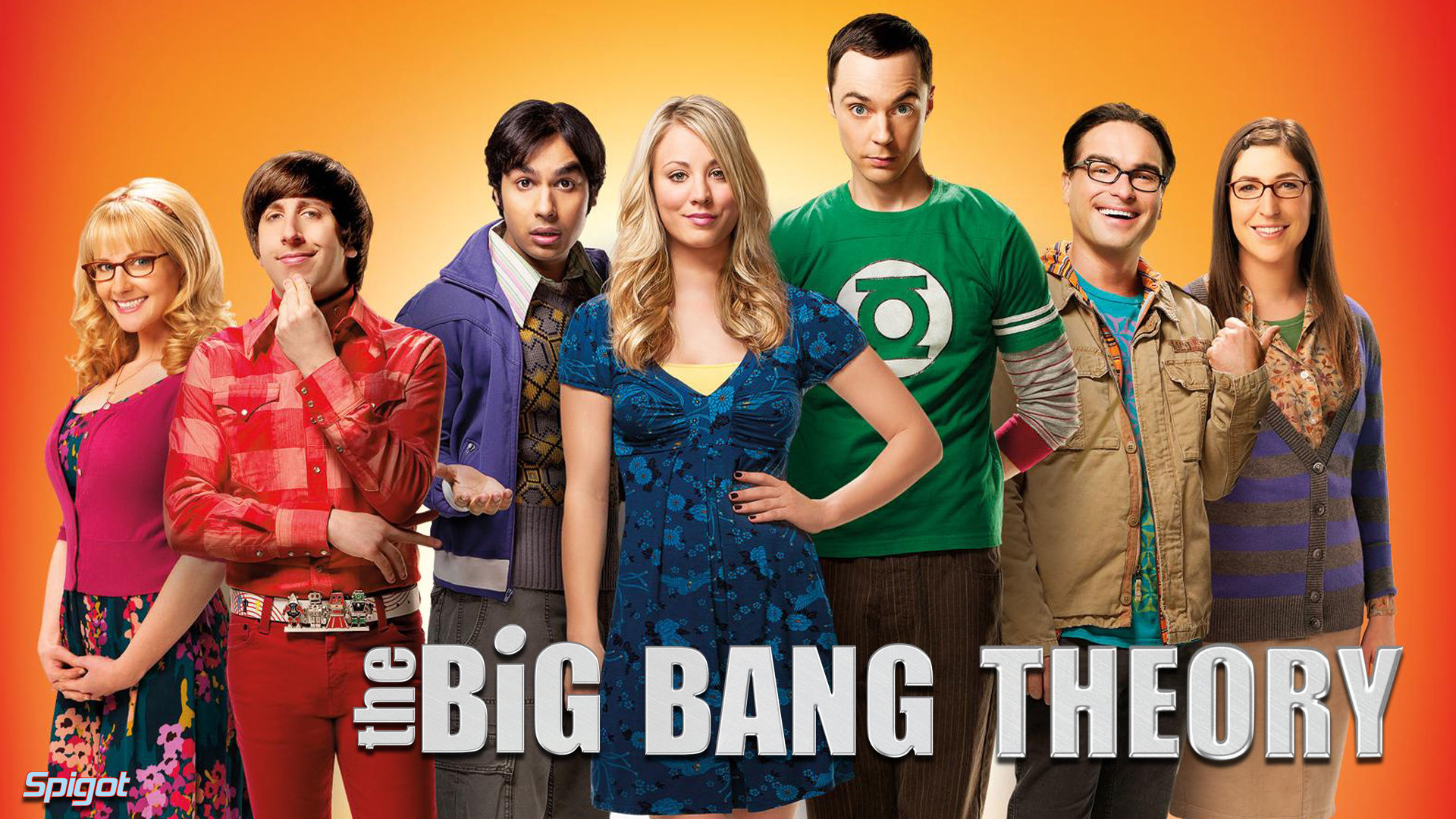
In later years we have had shows like The Big Bang Theory which gives a much more varied and better depiction of nerds than other shows. I love the show, but I think it is sad that the female charcters on the show is not allowed to be as "nerdy" as the boys. Sure Amy Farrah Fawler is quite nerdy, but none of the girls actually engage in or even as much as try to understand the whole "nerd culture" with Star Wars, Star Trek, comic books, video games etc.


To me there were two characters who, more than any else, got me proud to be a nerd: Hermione Granger from the Harry Potter books and Rory Gilmore of Gilmore Girls. I intend to talk about them much more in other posts, so I do not want to give it all away here. They are not exaggerations of nerdy stereotypes and they are also allowed to be nerdy throughout their plotlines without being ridiculed or having to go through make overs to make them "more pretty" or "popular". They actually seem very confident in their nerdiness. This I think is very important. I think it is great for female nerds to have characters like this who are confident with their nerdiness to look up to. Good role models are a necessit for everyone!